Making Agile Work in Government: A Practical Guide
Government IT teams often struggle to adopt agile practices. The bureaucratic environment, competing stakeholders, and rigid budget cycles seem incompatible with the flexibility agile promises. But with the right adaptations, agile can transform how government delivers digital services.
This guide covers practical process improvements that address the unique challenges of government IT.
What Needs to Change
Before diving into specific practices, it's worth identifying the key areas where government IT typically needs improvement:
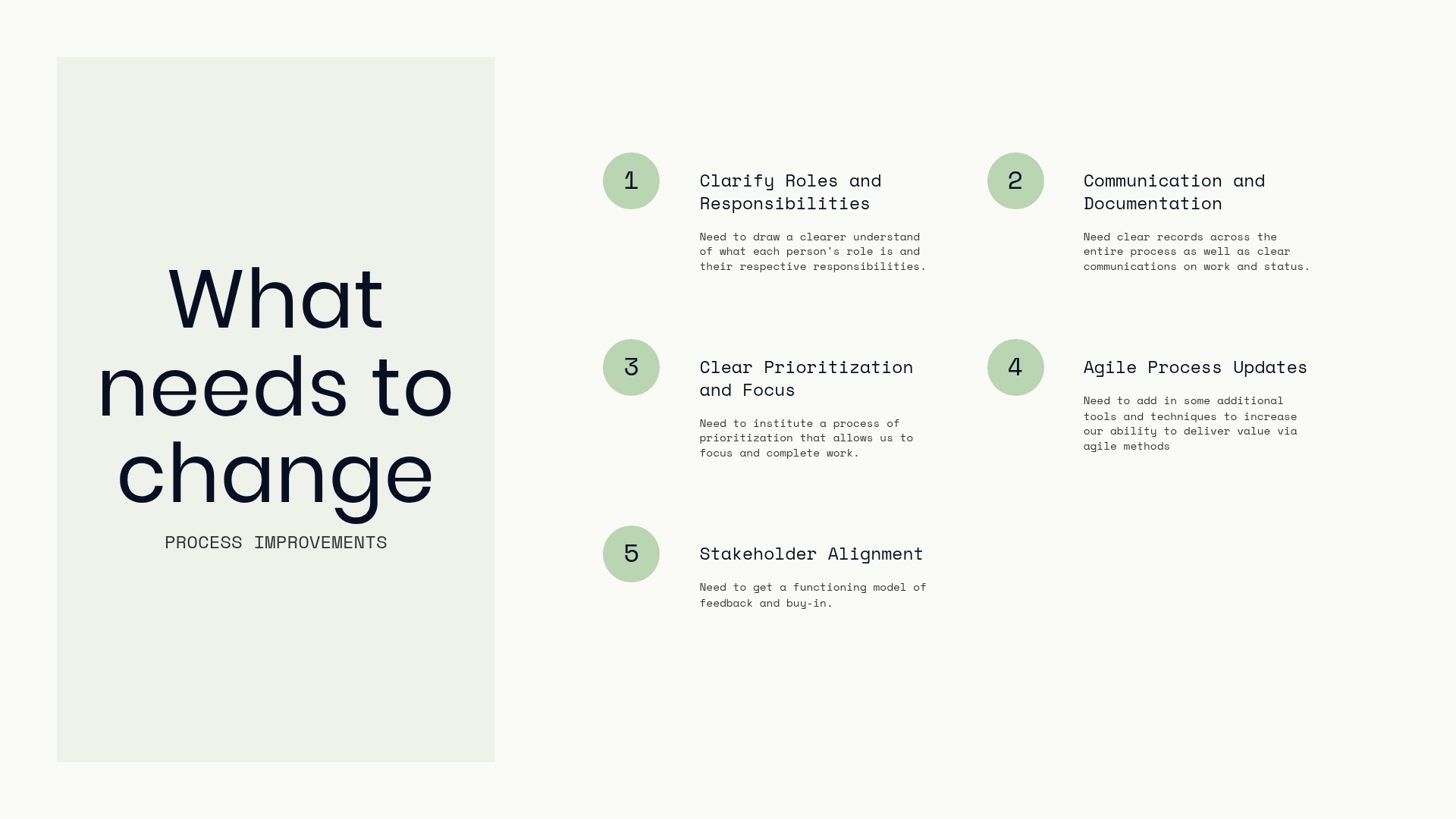
- Clarify Roles and Responsibilities - Everyone needs to understand their role and what they're accountable for
- Communication and Documentation - Clear records and status updates across the entire process
- Clear Prioritization and Focus - A process that allows teams to focus and complete work
- Agile Process Updates - Tools and techniques to deliver value iteratively
- Stakeholder Alignment - A functioning model for feedback and buy-in
Let's tackle each of these.
1. Clarify Roles and Responsibilities
Agile teams need clear ownership. In government, this often means adapting traditional scrum roles to fit your organizational structure.
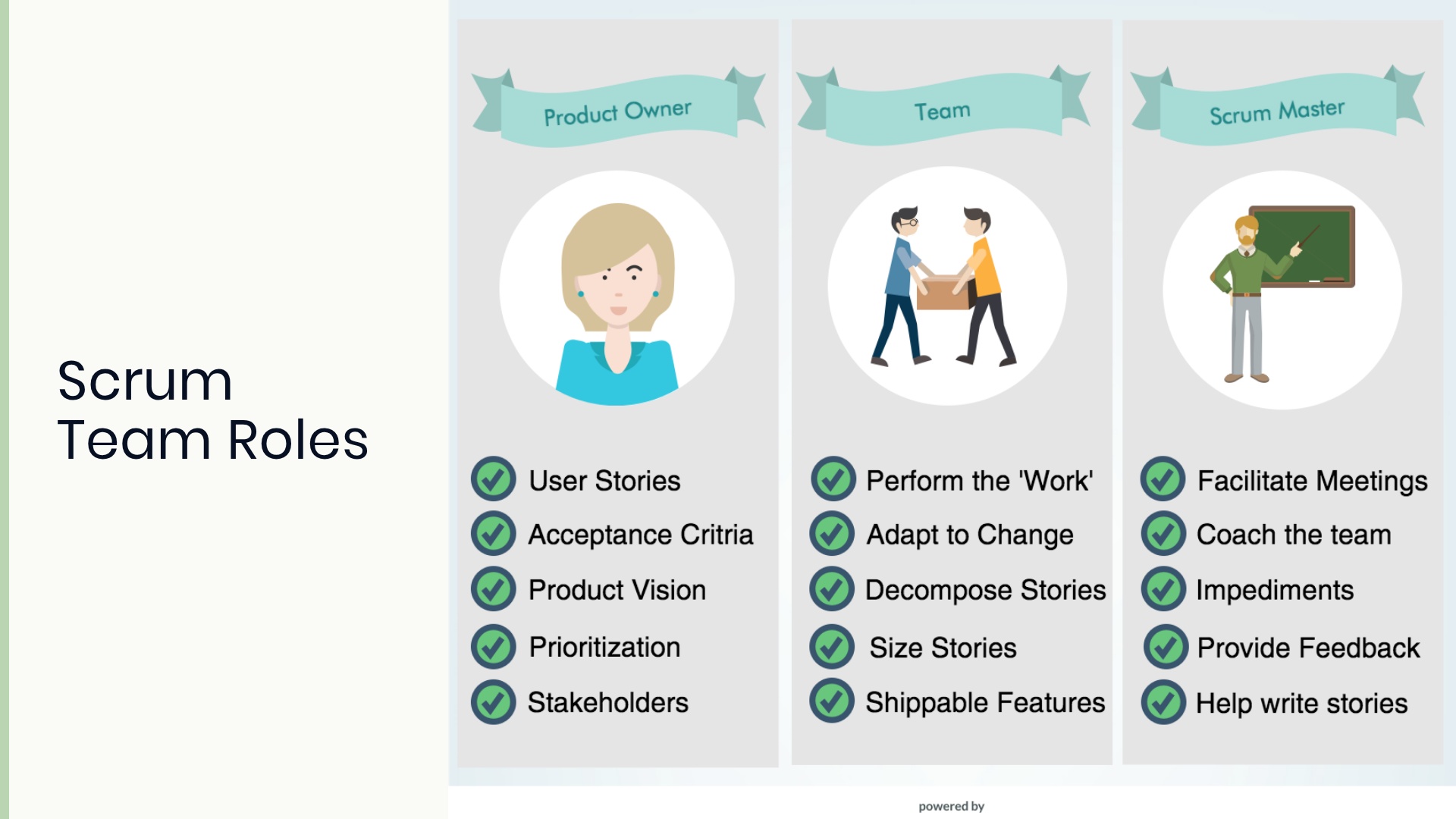
Product Owner
- Owns user stories and acceptance criteria
- Maintains the product vision
- Handles prioritization
- Manages stakeholder relationships
Development Team
- Performs the actual work
- Adapts to changing requirements
- Breaks down and sizes stories
- Delivers shippable features
Scrum Master (or Delivery Lead)
- Facilitates meetings
- Coaches the team on agile practices
- Removes impediments
- Helps write better stories
In government, the Product Owner role is often the hardest to fill. It requires someone with authority to make prioritization decisions and deep knowledge of user needs. Consider pairing a business stakeholder with a technical product manager if no single person can fill this role.
2. Clear Focus and Prioritization
Government teams are often pulled in multiple directions. The solution is ruthless focus on completing work rather than starting work.
Monotasking Over Multitasking
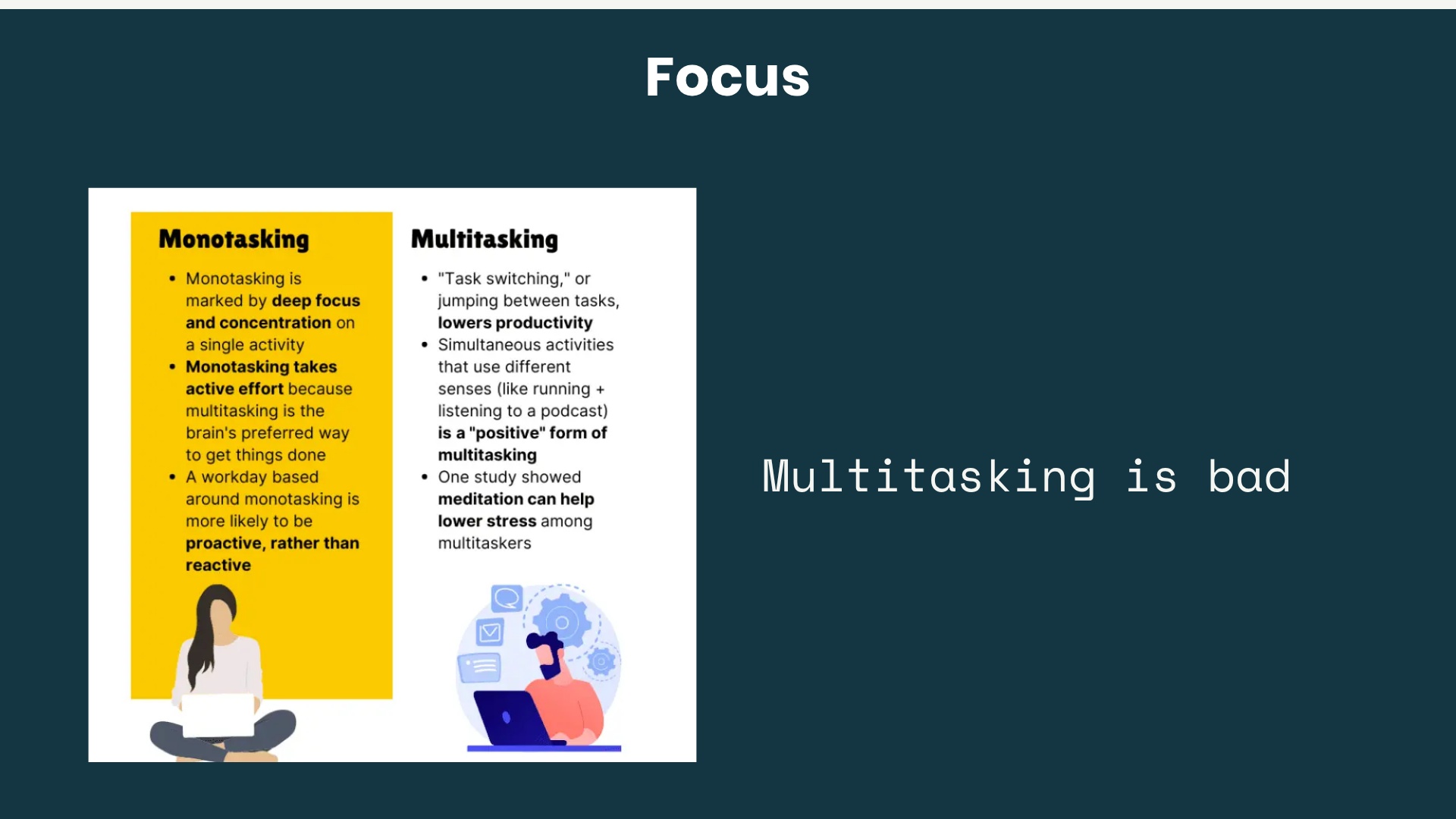
Task switching destroys productivity. When team members juggle multiple projects, everything takes longer and quality suffers. Protect your team's focus by:
- Limiting work in progress
- Completing one epic before starting another
- Saying "not yet" instead of "yes" to new requests
Complete Epics Before Moving On
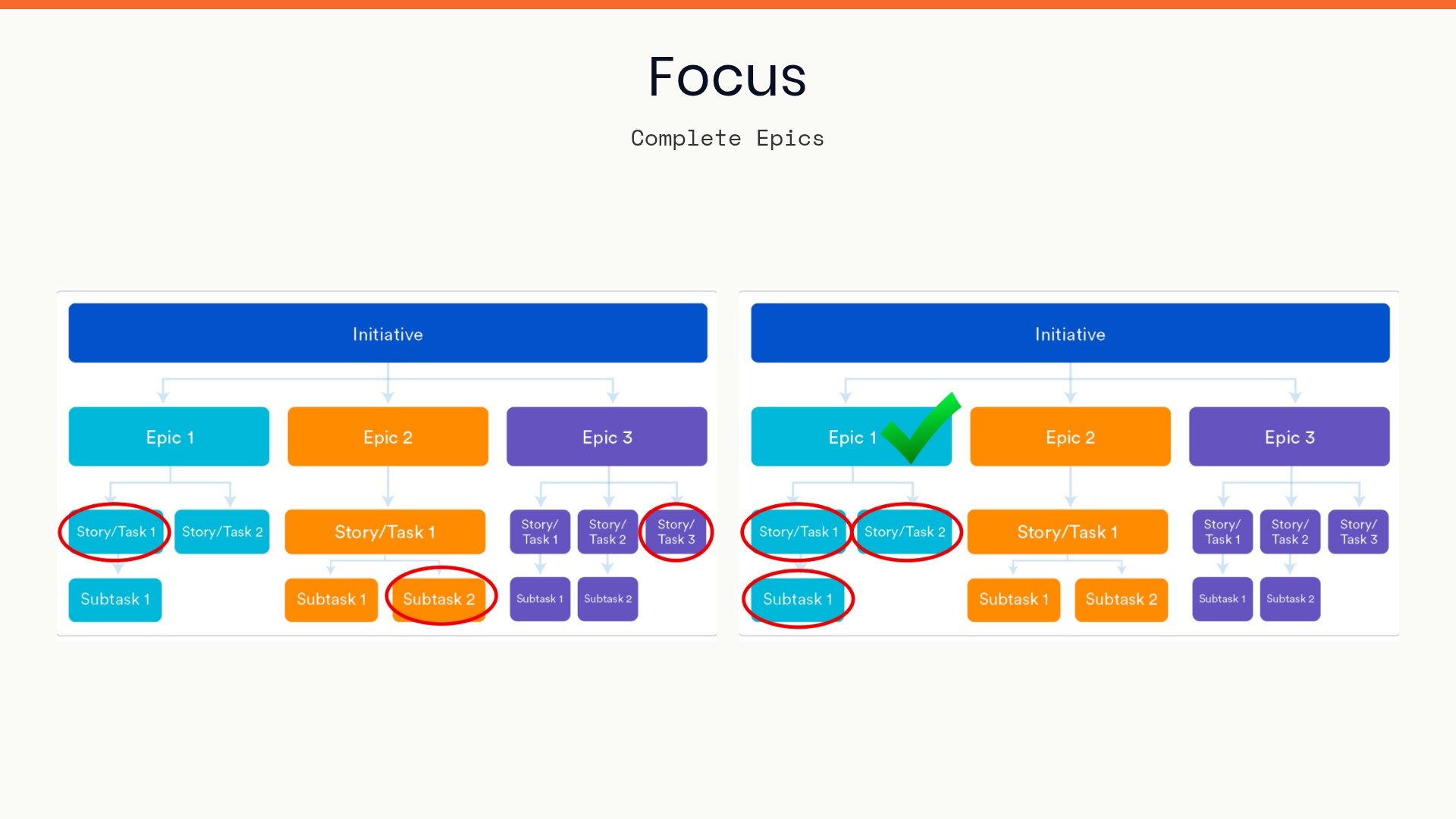
Scattered work across multiple initiatives leads to nothing getting done. Instead, focus the team on completing one epic at a time. This delivers value faster and reduces context switching.
The T.I.E.S. Hierarchy
Connect all work to strategy using a clear hierarchy:
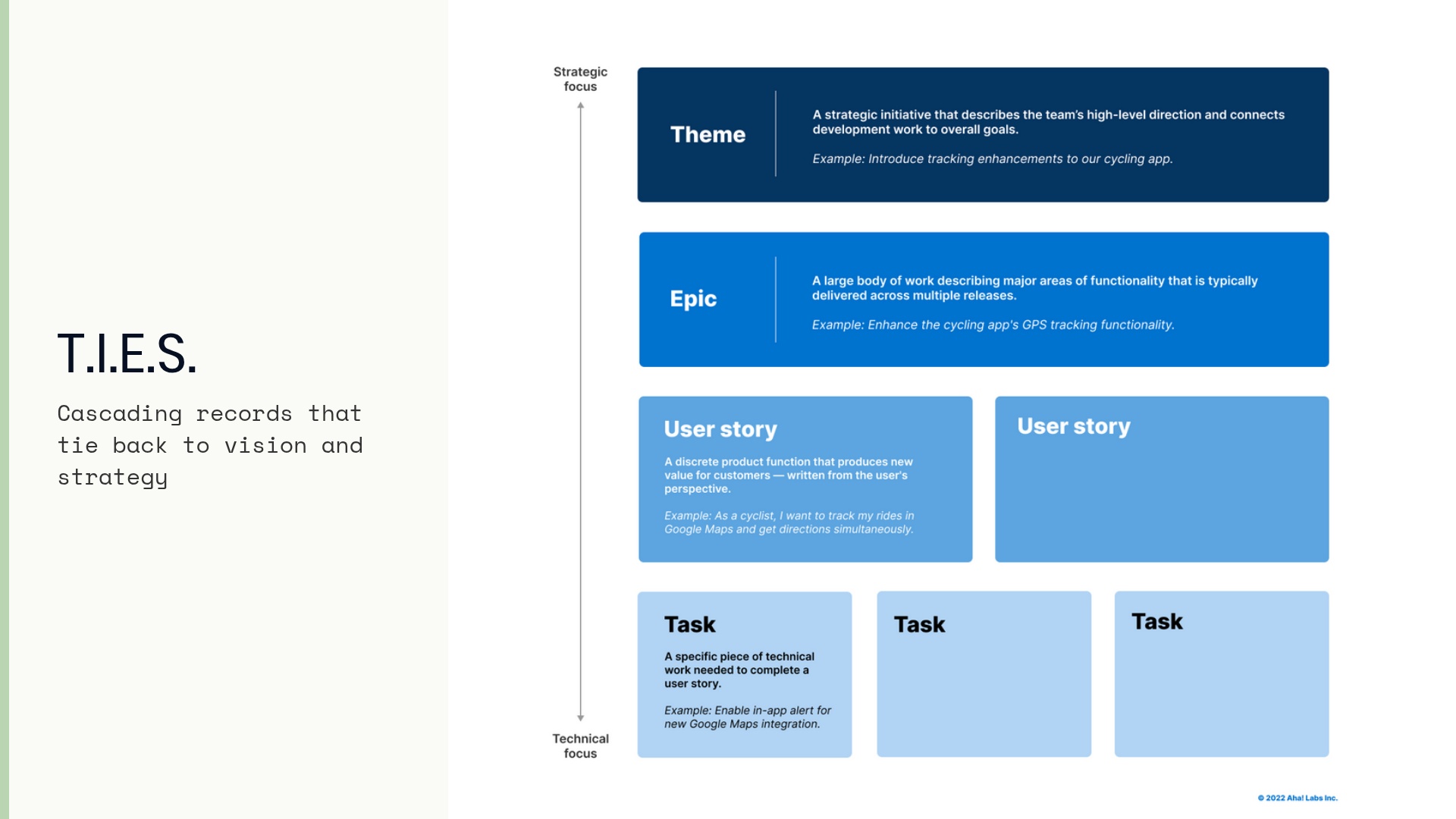
- Theme: Strategic initiative connecting work to organizational goals
- Epic: Large body of work delivered across multiple releases
- Story: Discrete product function from the user's perspective
- Task: Specific technical work to complete a story
This hierarchy ensures every task connects to a strategic objective - critical for government budget justification.
Prioritization Matrix
Not everything is equally important. Use a simple value/effort matrix to decide what to do:
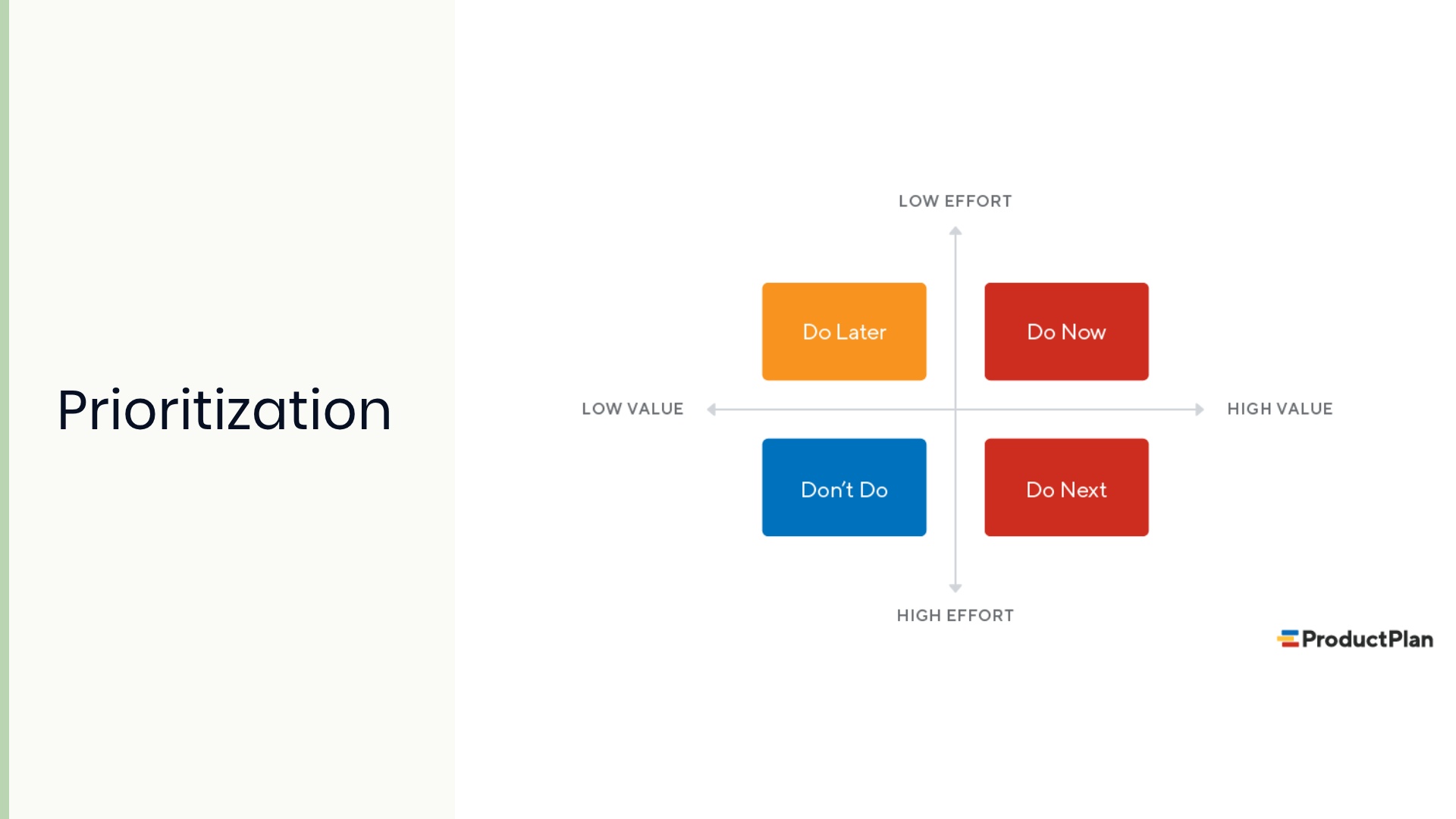
- Do Now (High Value, Low Effort): Quick wins that deliver immediate value
- Do Next (High Value, High Effort): Important work that needs planning
- Do Later (Low Value, Low Effort): Nice to have, fit in when possible
- Don't Do (Low Value, High Effort): Explicitly remove from consideration
The key is making these decisions visible. A prioritized backlog that stakeholders can see reduces the endless negotiation that plagues government IT.
3. Documentation and Artifacts
Government requires documentation. The trick is creating artifacts that serve both agile practices and organizational requirements.
Product Canvas
A single page that captures the fundamentals of what you're building:
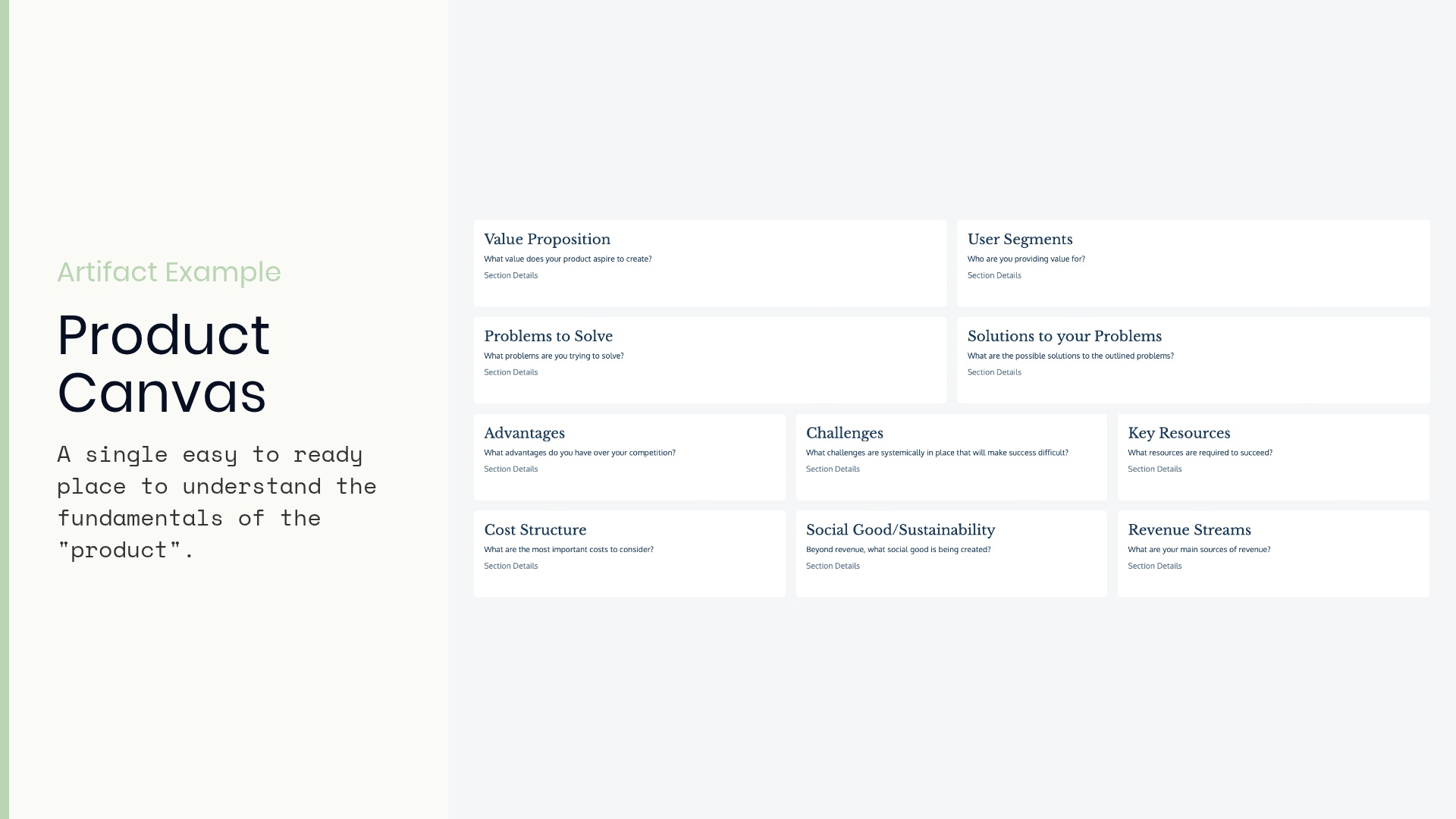
Include:
- Value Proposition
- User Segments
- Problems to Solve
- Solutions
- Advantages and Challenges
- Key Resources
- Cost Structure
- Social Good/Sustainability goals
This becomes your alignment document - the thing everyone can point to when questions arise about scope or direction.
Alignment Document (Epic Brief)
Before starting significant work, create a brief document answering:
- What problem are we solving?
- Who is the audience?
- Why is this the right problem to solve now?
- How will we measure success?
- What are potential solutions?
This prevents the common government failure mode of building something nobody asked for.
Now/Next/Later Roadmap
Instead of detailed Gantt charts that become outdated immediately, use a simple three-column roadmap:
- Now: Well-understood problems with committed development resources
- Next: Design or discovery stage, validating assumptions
- Later: Future aspirations, still fuzzy
This gives stakeholders visibility without false precision.
4. Agile Process Practices
Sprint Budgets
Don't plan to use 100% of your capacity on roadmap items. Reality intrudes:
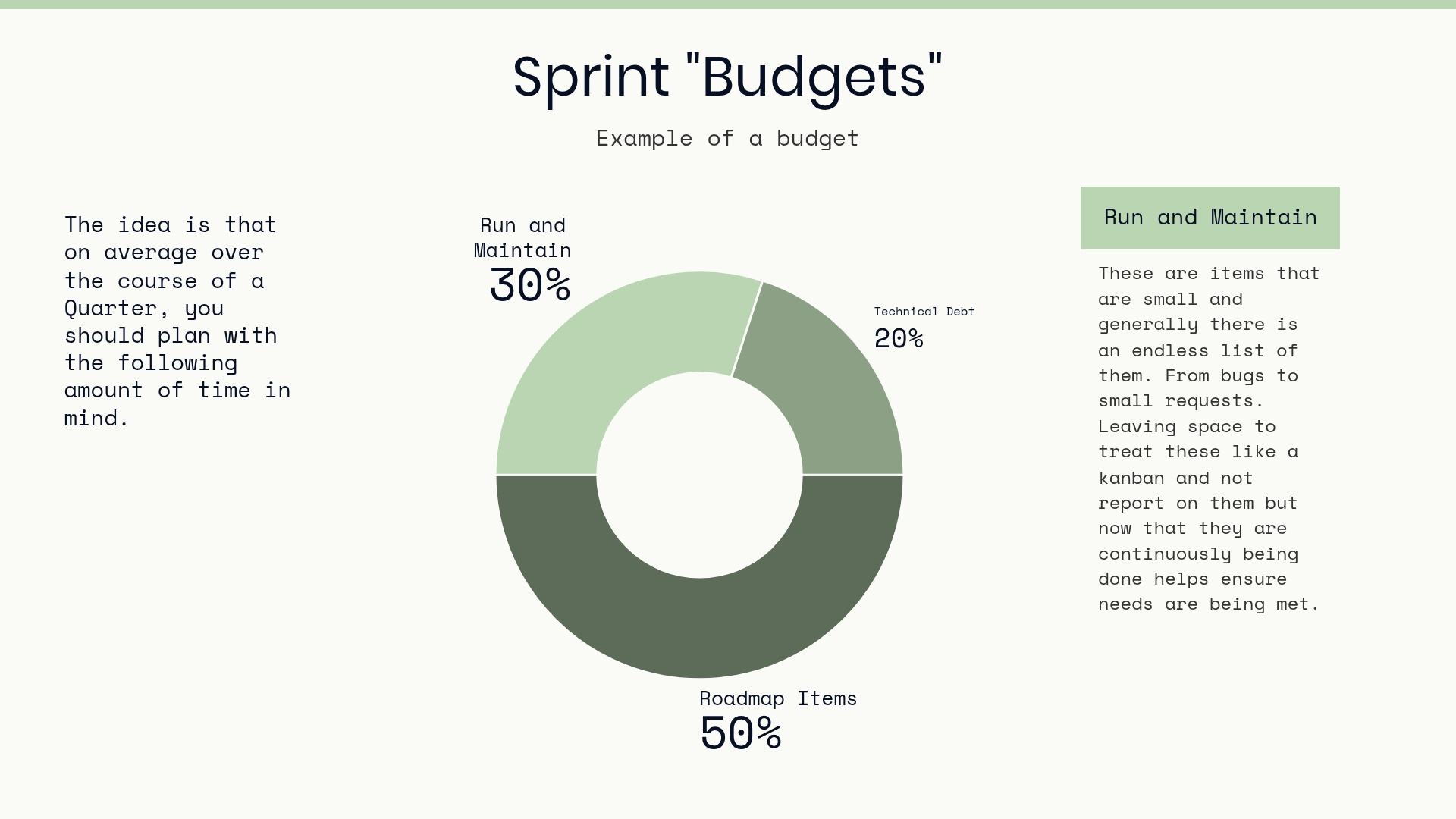
A healthy sprint budget:
- 50% Roadmap Items: New features and improvements
- 30% Run and Maintain: Bug fixes, small requests, keeping things running
- 20% Technical Debt: Paying down accumulated shortcuts
This prevents the common failure of overcommitting to new features while systems degrade.
Planning Poker for Estimation
Get the whole team involved in estimating work:
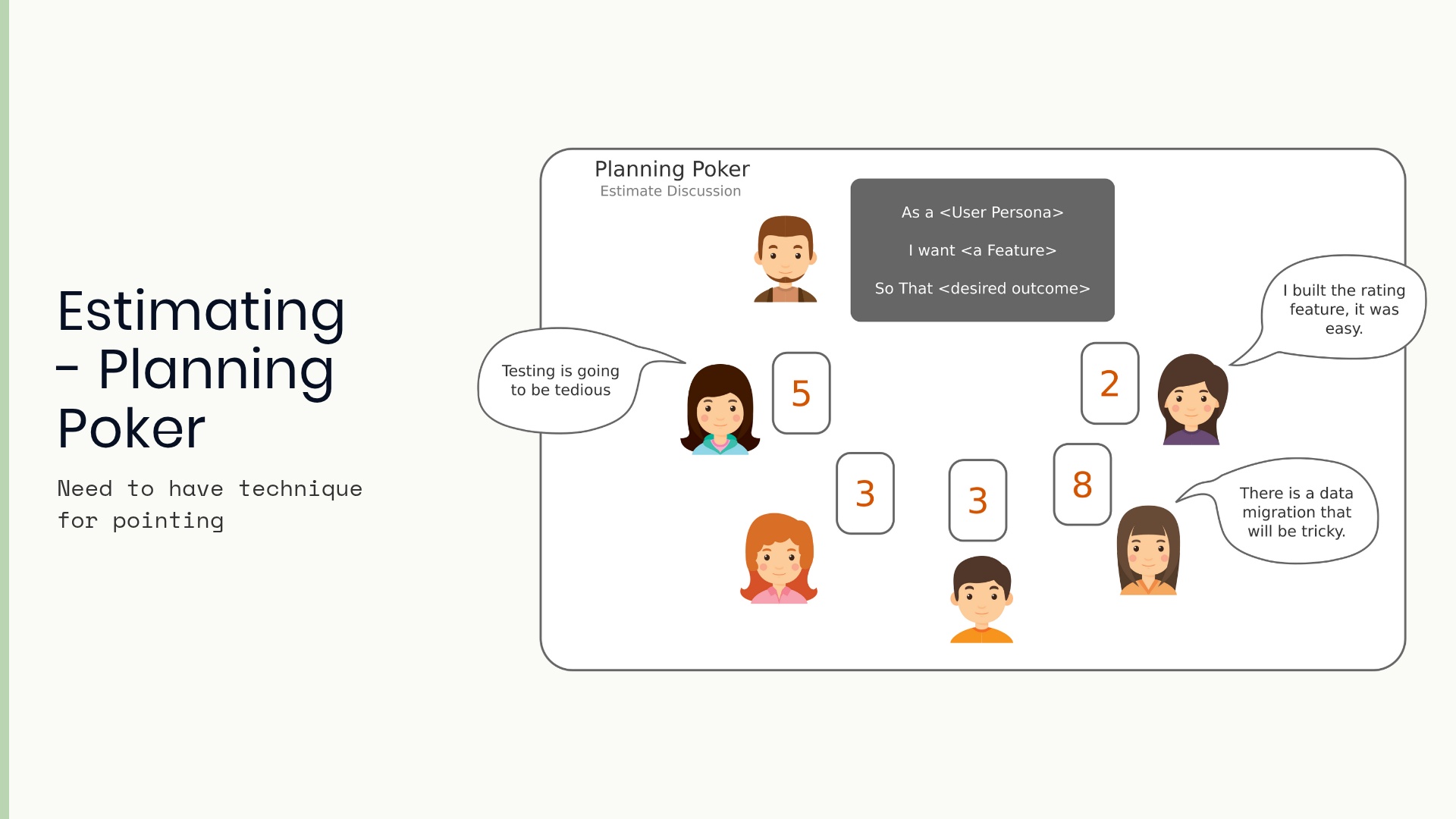
Everyone votes simultaneously on story complexity. When estimates differ significantly, discuss why. The person who gave the high estimate might know about a data migration nobody else considered.
This surfaces hidden complexity and builds shared understanding.
Quarterly Planning
Break the year into manageable chunks:
- Quarterly Goals: What outcomes will we achieve this quarter?
- Sprint Planning: How do we break quarterly goals into two-week increments?
- Daily Standups: Are we on track? What's blocking us?
This cadence provides enough structure for government reporting while maintaining agile flexibility.
5. Stakeholder Alignment
Government has many stakeholders. You can't give everyone what they want, but you can give everyone visibility.
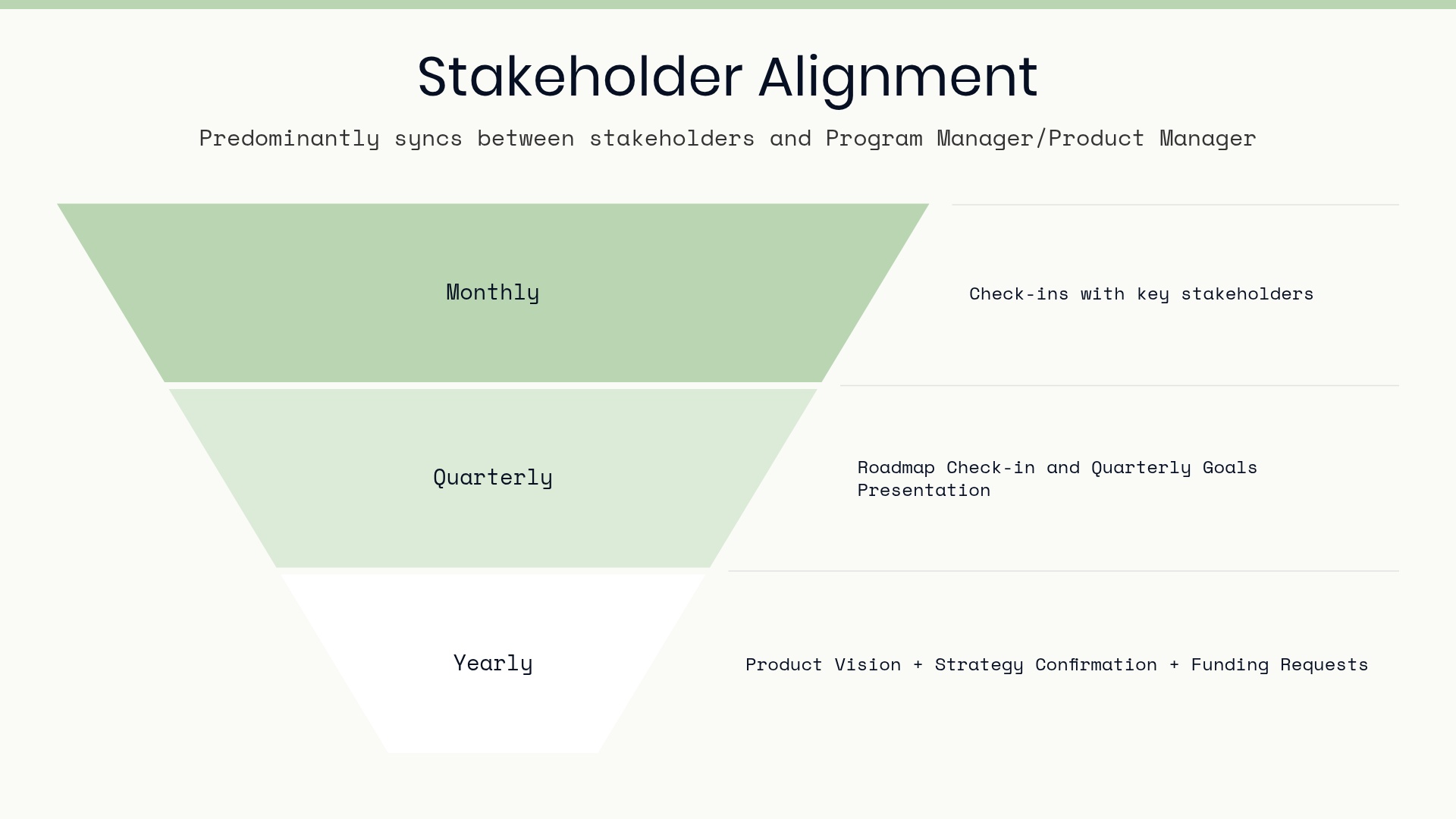
Monthly
Check-ins with key stakeholders. Share progress, gather feedback, adjust priorities if needed.
Quarterly
Roadmap review and goal setting. This is where stakeholders can influence direction.
Yearly
Product vision and strategy confirmation. Align with budget cycles and funding requests.
The key is predictable engagement. Stakeholders who know when they'll be consulted are less likely to interrupt the team's work with ad-hoc requests.
Common Government Agile Pitfalls
"Wagile" (Waterfall in Agile Clothing)
Using agile terminology while still doing big upfront requirements and fixed scope. Real agile means accepting that scope will change as you learn.
No Product Owner Authority
A Product Owner who can't say "no" isn't a Product Owner. They're a note-taker. Ensure your PO has real decision-making power.
Ignoring Technical Debt
Government systems often run for decades. Skipping that 20% technical debt allocation compounds into systems that can't be maintained.
Estimation Theater
Spending hours debating whether something is 3 points or 5 points. Use rough sizing (S/M/L) if detailed estimation isn't adding value.
Getting Started
You don't need to implement everything at once. Start with:
- Clarify one team's roles - Who's the Product Owner? Who's on the team?
- Create a prioritized backlog - Visible to stakeholders
- Run two-week sprints - Demonstrate working software every two weeks
- Hold retrospectives - What's working? What isn't? Adapt.
The practices that work for your organization will emerge through experimentation. The agile principle applies to adopting agile itself: start small, learn fast, iterate.
Adapting agile practices for government requires patience and persistence. Have experiences to share? Contribute on GitHub.